
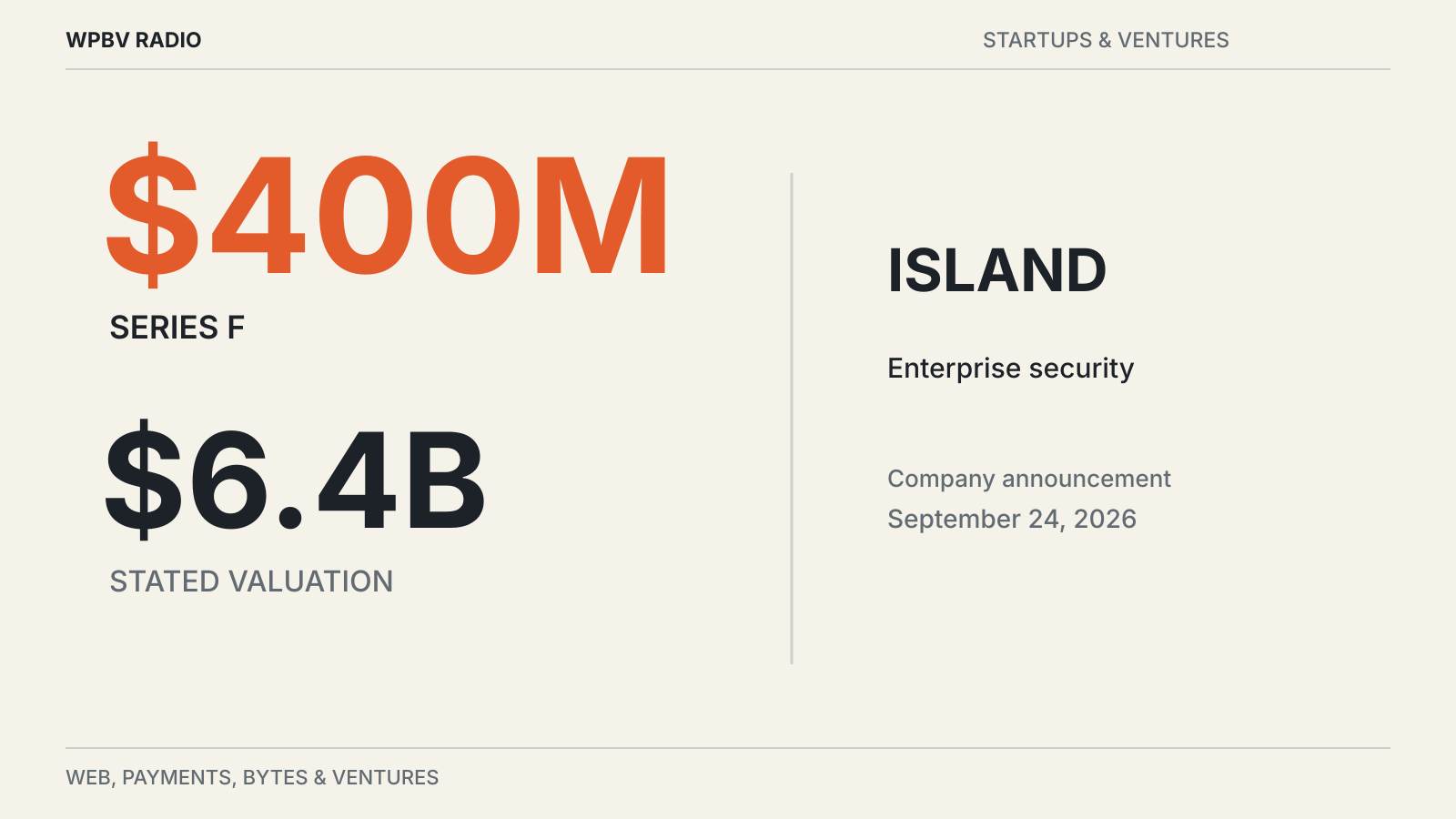
Island announced a $400 million Series F on September 24 at a stated valuation of $6.4 billion. Evolution Equity Partners led the round, with participation from existing and new investors.
The company said in its funding announcement that the capital will support its next stage of growth as enterprises adopt AI agents and change how employees use applications and data.
From an enterprise browser to wider controls
Island began with an enterprise browser and now describes a broader set of controls spanning browsers, endpoints, networks, identity and data.
Its argument is that organizations need to understand both human and agent activity: who is acting, what information is accessible and which actions should be allowed. The company presents a common policy and audit framework as its response.
That is Island’s product positioning. The financing announcement does not independently demonstrate how effectively the controls work across every supported environment.
Growth claims leave financial questions open
Island says it employs 1,000 people and has doubled annual recurring revenue each fiscal year since its 2022 launch. The announcement does not disclose the underlying ARR figure or establish profitability.
Those omissions matter when interpreting the funding headline. A valuation reflects the financing transaction; it is not revenue or cash available for ordinary operations. A growth percentage also needs a starting base to show the absolute scale of the business.
Our guide to reading a startup funding round explains those distinctions in more detail.
What to watch next
The useful follow-up is how the broader product is adopted and operated: which customer workflows it covers, how controls are enforced and how clearly activity can be reviewed.
For companies evaluating agent software, the announcement points to a growing operational requirement. Giving an agent an identity is only the beginning; its access and actions need to remain understandable as it moves between applications.