The Hop3 project released version 0.7 on July 31, adding application installation from its web dashboard and checks that verify a deployed app can actually be used. The self-hosting platform now installs from a catalog of 20 applications and tests authentication after deployment. The release also adds a web application firewall, email configuration and application-upgrade recovery.
The release post names applications including Nextcloud, WordPress, Gitea, Mattermost and Matomo. A dashboard installation can provision databases, configure the runtime and reverse proxy, request a certificate and run the application’s initial setup.
A login page is only the start of a working deployment
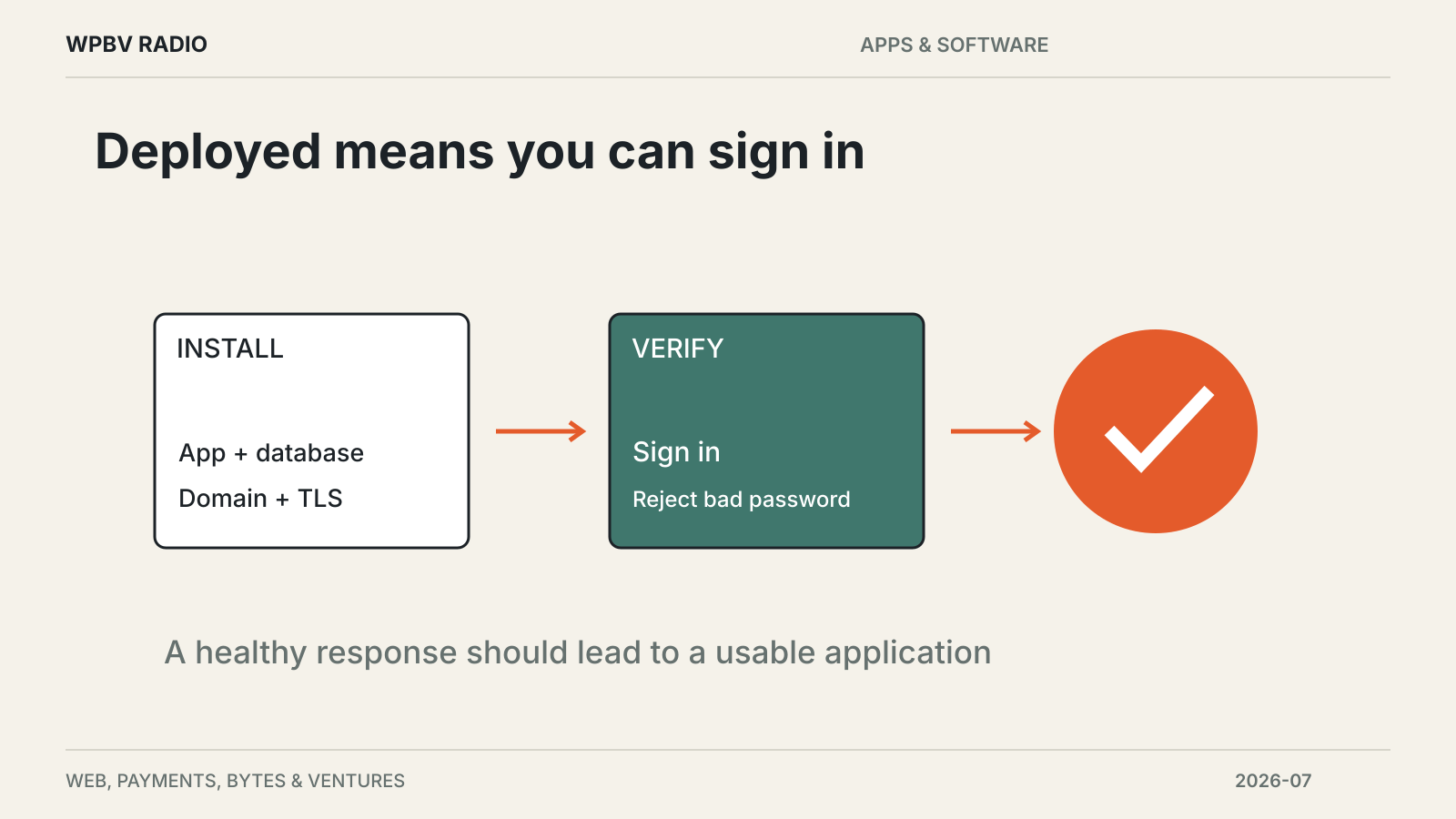
Hop3 now requires catalog applications to include a smoke test that signs in using the application’s own authentication flow and checks that an incorrect password is rejected. The test runs after deployment and can be invoked again later.
The project reports that introducing those checks exposed problems that a simple successful HTTP response had missed. Examples included authentication configuration and mismatches between generated credentials and the credentials an application actually used.
For applications that support it, a separate non-privileged probe account lets the check keep working after an administrator changes the initial password. This makes the test useful beyond the first installation.
Upgrades include a route back
The application-upgrade workflow takes a snapshot, redeploys, runs migrations and checks the result. According to the project, failures in the build, migration or health check trigger restoration of the pre-upgrade snapshot.
The release also adds LeWAF, a web application firewall engine that can be enabled per app, and a shared email service. Email options include a relay backend and a development sink; direct mail delivery remains a preview.
These features reduce repeated setup work for people operating several applications. They also leave meaningful administration choices: whether to enable the firewall, which mail backend to use and how to preserve backups outside an individual upgrade cycle.
Hop3 says multi-server deployment and multi-tenancy remain outside the completed grant’s scope. The release should therefore be assessed as a self-hosting platform with those current boundaries.
More software and hosting coverage is available at the Apps & Software desk.