The Selenium project released version 4.44 on May 12, updating its browser-automation libraries and Grid infrastructure. The release introduces a command-line tool, adds a Redis-backed Distributor option for Grid and continues work on bidirectional browser communication. Teams using the .NET binding also face explicit breaking changes, so this is an update to review before applying across a test fleet.
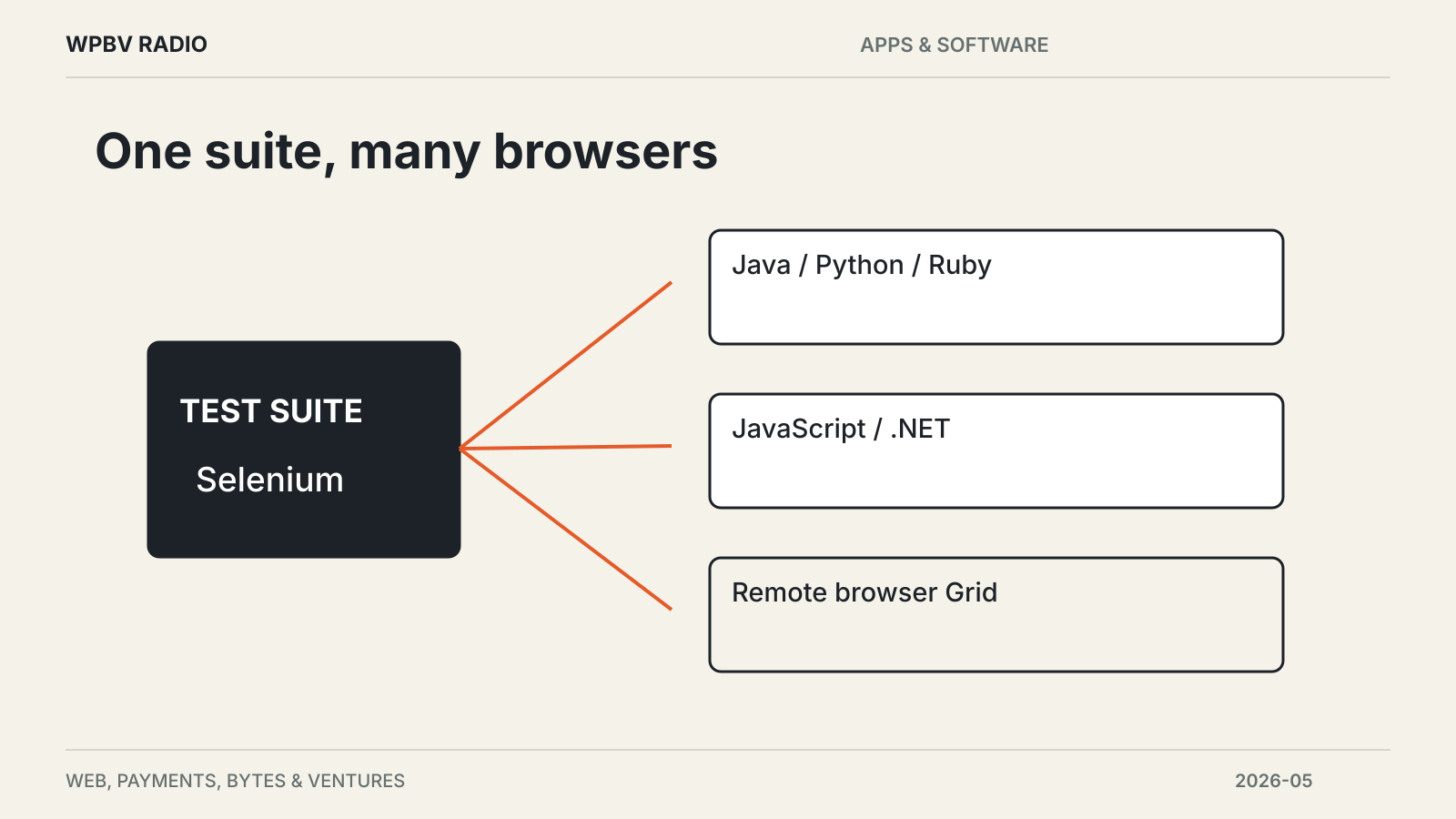
The project’s release post covers JavaScript, Ruby, Python, .NET and Java, alongside Grid. The changes differ by language; a feature listed for one binding should not be assumed to work identically in all of them.
Browser events receive more attention
Selenium’s BiDi work concerns communication that can carry browser events back to an automation client, alongside commands sent to the browser. That is useful when a test needs to observe what happens during an interaction rather than inspect only the final page.
Python moves toward generated BiDi files and adds higher-level script-execution APIs. The .NET update changes how commands and events are declared and expands event streaming.
The .NET notes also list removal of obsolete members and a change allowing UnhandledPromptBehavior to accept a string or map. Teams should read the migration implications for their binding before assuming a passing suite on the previous release will compile unchanged.
Grid gains another distribution option
The new Redis-backed Distributor becomes a built-in Grid option, and the release fixes WebSocket proxy issues. For organizations running remote browser sessions, those changes sit in infrastructure shared by many tests.
That creates two separate upgrade questions: whether test code remains compatible and whether the Grid environment behaves as expected. A small pilot using representative browsers and tests can reveal those differences before a broader rollout.
Java receives nullability work and fixes for a regression affecting custom locators. JavaScript changes internal implementations of attribute and display checks. These are maintenance details, but a small change in how an element is found or inspected can matter to a large suite.
The Apps & Software desk covers tools that support everyday development and testing.