Stripe and Tempo introduced the Machine Payments Protocol on March 18, providing an open specification for software agents to coordinate payments with services. Stripe says businesses can accept those payments through its PaymentIntents API, including stablecoins and supported fiat methods. The aim is to let an agent purchase a resource without navigating a checkout designed for a person.
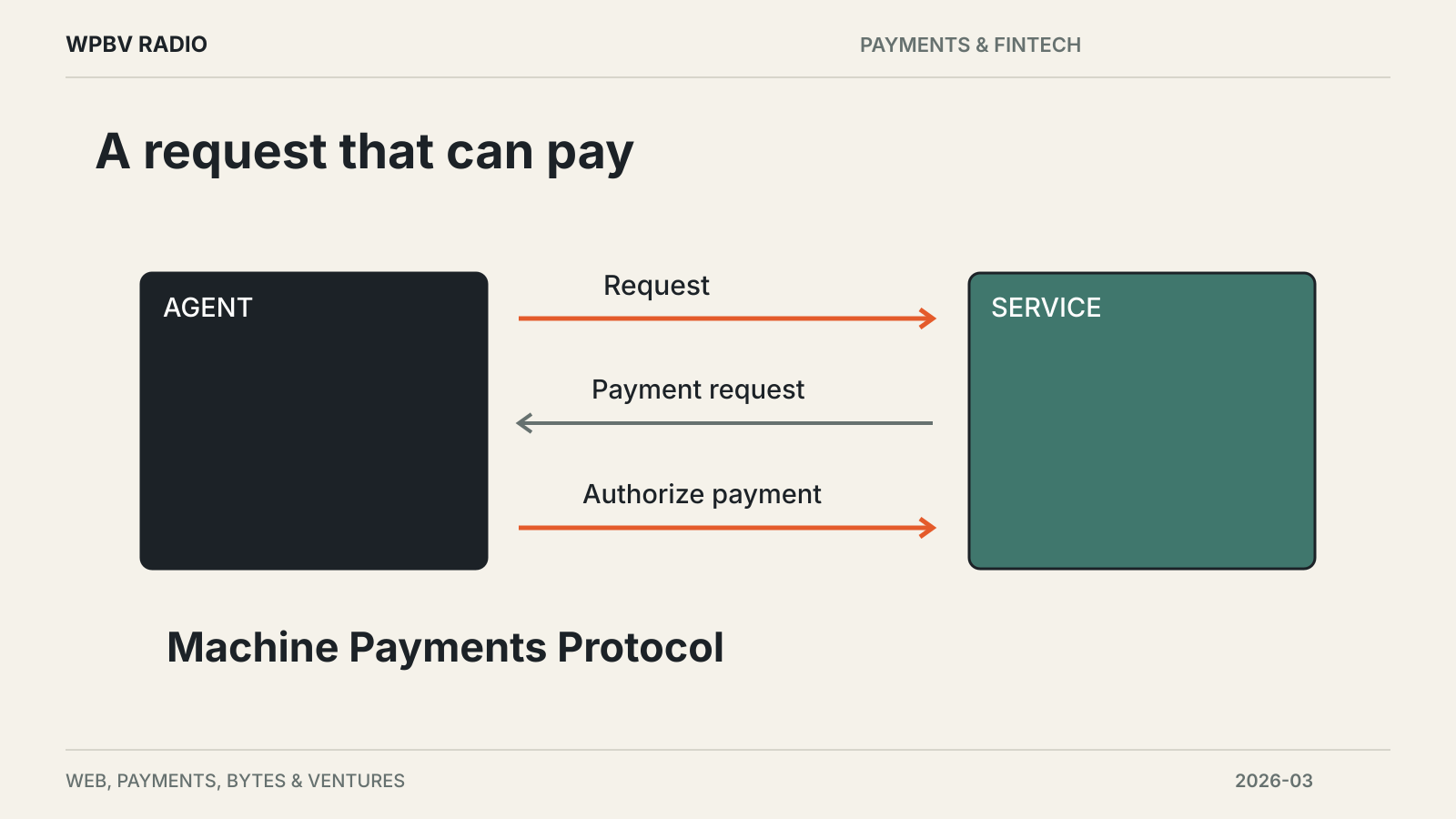
The Stripe announcement describes a simple exchange: an agent requests a resource, the service responds with a payment request, and the resource is delivered after the agent authorizes payment.
Payment becomes part of the service request
A paid API call or a short browser session does not always fit a monthly subscription. An agent may need one task completed by a service it has never used before. MPP provides a common way to coordinate that transaction.
Stripe lists Browserbase, which lets agents pay for headless-browser sessions, among its early examples. It also describes physical-world uses, including printing and sending mail through PostalForm. These examples show the protocol’s intended reach without establishing that every internet service accepts it.
For card and buy-now-pay-later methods, Stripe describes the use of Shared Payment Tokens. The protocol and a particular payment method remain separate choices: supporting MPP does not mean a business must price everything in a crypto asset.
Existing merchant operations still apply
Stripe says the payments appear in its API and Dashboard alongside other transactions. Funds settle into the business’s existing balance, in its default currency and on its standard payout schedule. A programmatic purchase therefore does not automatically imply an immediate bank payout.
That continuity may be useful for businesses that already handle reporting and refunds through Stripe. It also keeps a familiar operational question in view: what happens when the resource fails to arrive, the agent requests it twice or the customer wants a refund?
The announcement establishes the payment mechanism, while applications still need to decide who authorizes spending and how much an agent may spend. A service can understand a payment request without knowing whether the task that triggered it was sensible.
Follow the Payments & Fintech desk for reporting on the systems behind digital transactions.