Delete a wallet app and reinstall it on another device. With the right recovery method, the balance can appear again. That does not mean the coins traveled through the app store or were stored in your phone’s backup.
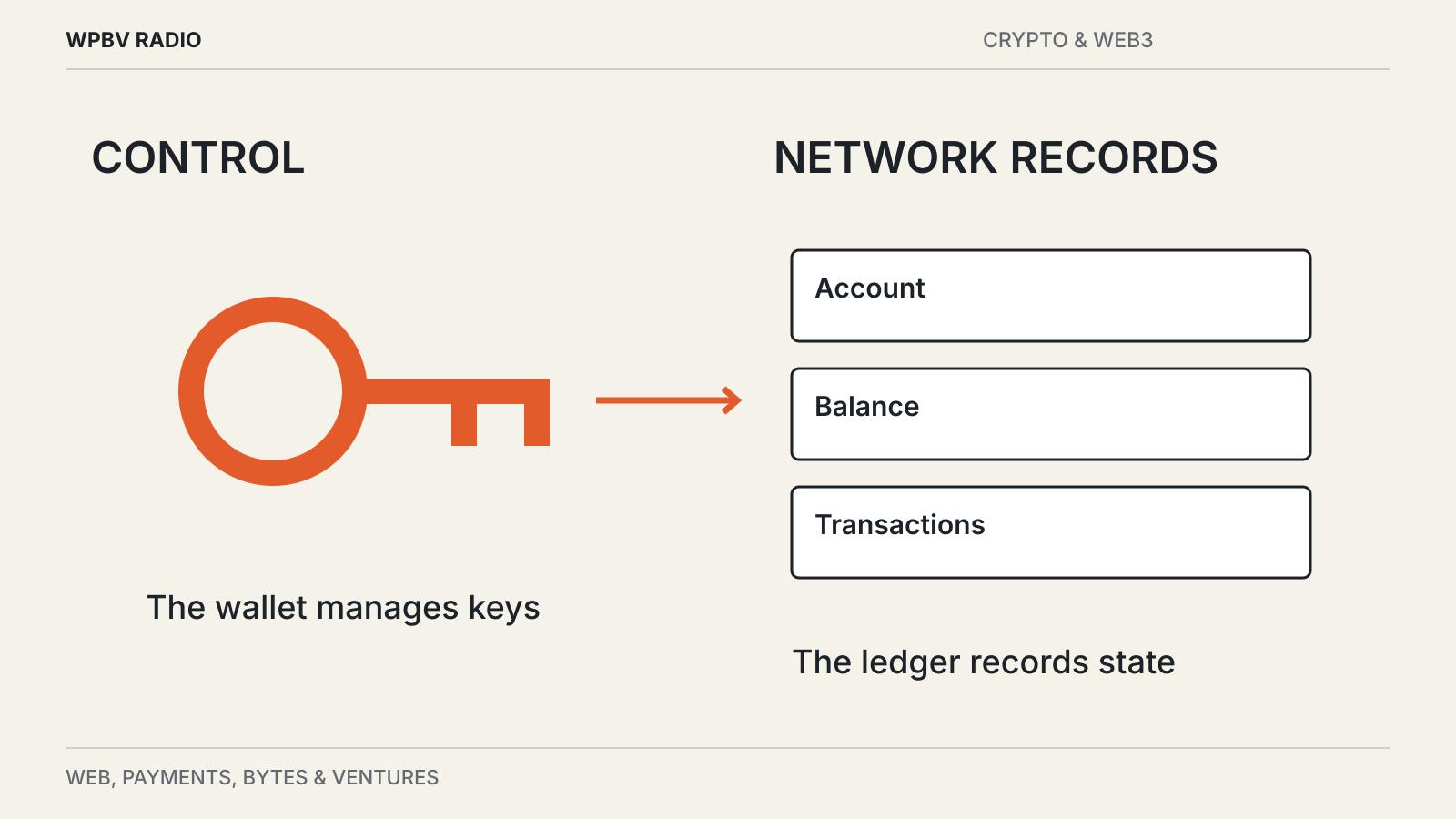
For a typical self-custodial wallet, the software manages keys and communicates with a blockchain. The network maintains the records that determine who can spend which assets. The wallet gives you a way to see those records and authorize changes.
An address is not a secret
An address identifies an account or destination in a network’s system. You share it when you want someone to send an asset. A private key, by contrast, is sensitive information used to create a valid signature.
The signature demonstrates authorization without publishing the private key itself. The network checks the signed transaction against its rules before accepting a state change.
Ethereum’s wallet introduction makes the distinction between an account and the interface used to interact with it. Different blockchains organize balances and spending rules differently, but the separation between a network record and the software presenting it is a useful starting point.
A wallet balance is therefore a view. It may rely on a remote service to retrieve recent network data. If that service is unavailable or the wrong network is selected, the display can be incomplete without the underlying assets having vanished.
What a recovery phrase restores
Many wallets derive keys from a recovery phrase. Restoring the same phrase in compatible software can recreate access to the corresponding accounts. The exact result also depends on the wallet’s derivation rules and any additional passphrase.
That is why the phrase deserves the same protection as control of the funds. A legitimate transfer does not require you to send the phrase to the recipient. A support conversation should not require it either.
Not every wallet uses a visible recovery phrase. Some use hardware devices, multiple signers, smart-account controls or other recovery arrangements. Learn the recovery method for the specific product before depositing assets, rather than assuming a generic tutorial applies.
Custody changes who can authorize a transfer
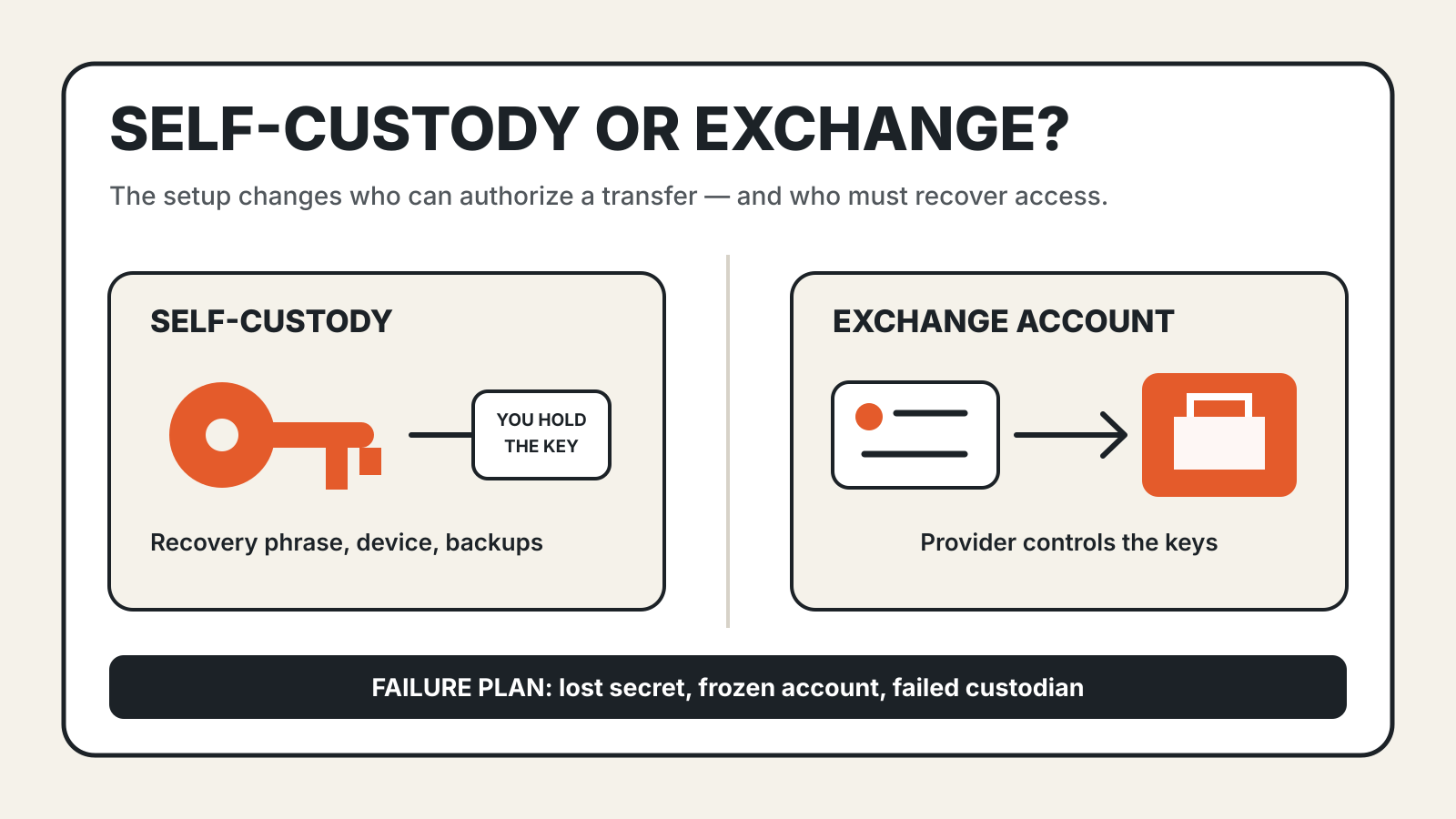
With a self-custodial setup, you manage the credentials or authorization mechanism. That provides direct control and places responsibility for protecting access on you.
With a custodial service, the provider controls the relevant blockchain credentials and maintains your account in its own system. What the app calls your balance may be a claim against that service rather than a separate on-chain address controlled only by you.
Both can present a similar send button. The important differences appear when you lose a device, forget a password, face an account restriction or need to withdraw. Read the provider’s description of custody and recovery, not just the interface labels.
The network is part of the address
An asset name alone is not sufficient routing information. Tokens with the same name can exist on different networks, and receiving services may support only some of them.
Before sending, compare the asset, network and destination instructions. A familiar-looking address format does not prove that the recipient will credit the deposit. If a service requires an additional identifier, include it exactly as instructed.
A small test transfer may help verify a route, although it still costs fees and does not prove that every later transaction will succeed. For a payment service, use its documented instructions and confirmation process.
The wallet also approves other actions
Sending funds is only one kind of authorization. A wallet can sign messages, approve token spending or grant permissions to an application. Those requests can have effects beyond a single transfer.
Our guide to connecting a wallet to an app explains how to read those requests. Knowing where the coins are is useful; knowing what your signature permits is what protects control over them.