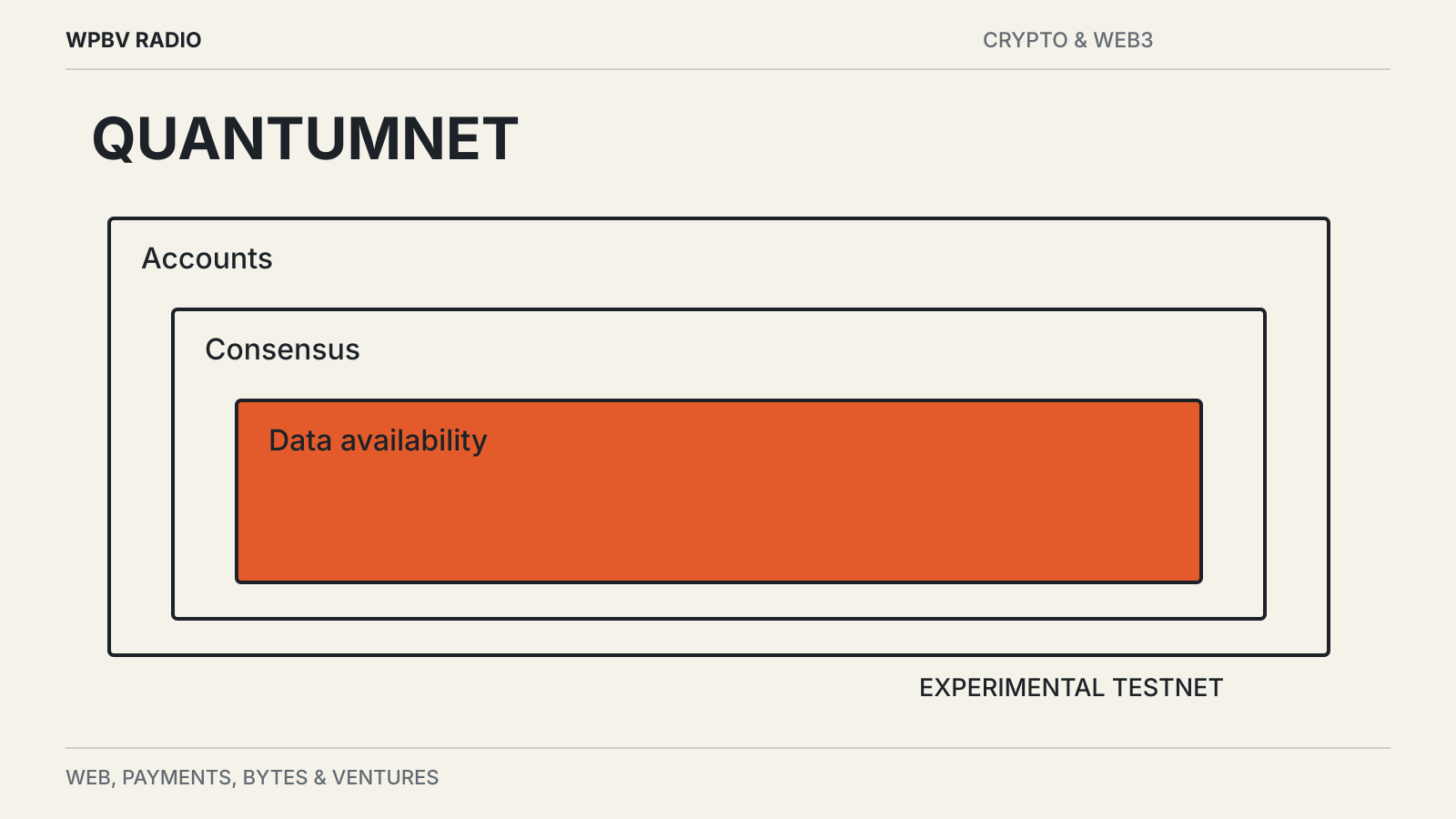
Tezos contributors launched Quantumnet on September 24, an experimental testnet for post-quantum changes across several parts of the blockchain protocol. It tests accounts, consensus and data availability together rather than a single signature swap, and it is a place to evaluate the design, not a completed mainnet migration.
The September 24 introduction says engineers from Nomadic Labs, Trilitech and other contributors developed the environment. It is intended for engineering work and evaluation, not production use.
More than a new account type
Quantumnet enables tz5 accounts using the ML-DSA-44 signature scheme. The work also extends to the assignment of block-production rights, consensus attestations and the Data Availability Layer.
Those changes address an important design issue: replacing the signature used by an ordinary account would leave other cryptographic dependencies elsewhere in a blockchain.
The announcement describes several experimental substitutions, including a different method for allocating block-production rights and new approaches to consensus aggregation and data availability. The purpose is to study the components together in a running environment.
An experiment, with further work ahead
The contributors describe this as a first iteration. Security analysis, performance improvements and better tooling remain part of the future work. Hardware requirements are still being evaluated.
The announcement does not establish a date for adopting these components on Tezos mainnet. A live test environment should not be read as a completed production migration or proof that every part of the design is ready.
For readers following the story, useful next evidence would include published evaluations, operational results and concrete proposals for later protocol changes. The testnet creates a place to gather that evidence.
Our wallet explainer introduces the role of keys and signatures in authorizing transactions. Quantumnet’s work concerns those mechanisms and additional systems that ordinary wallet users rarely see.