
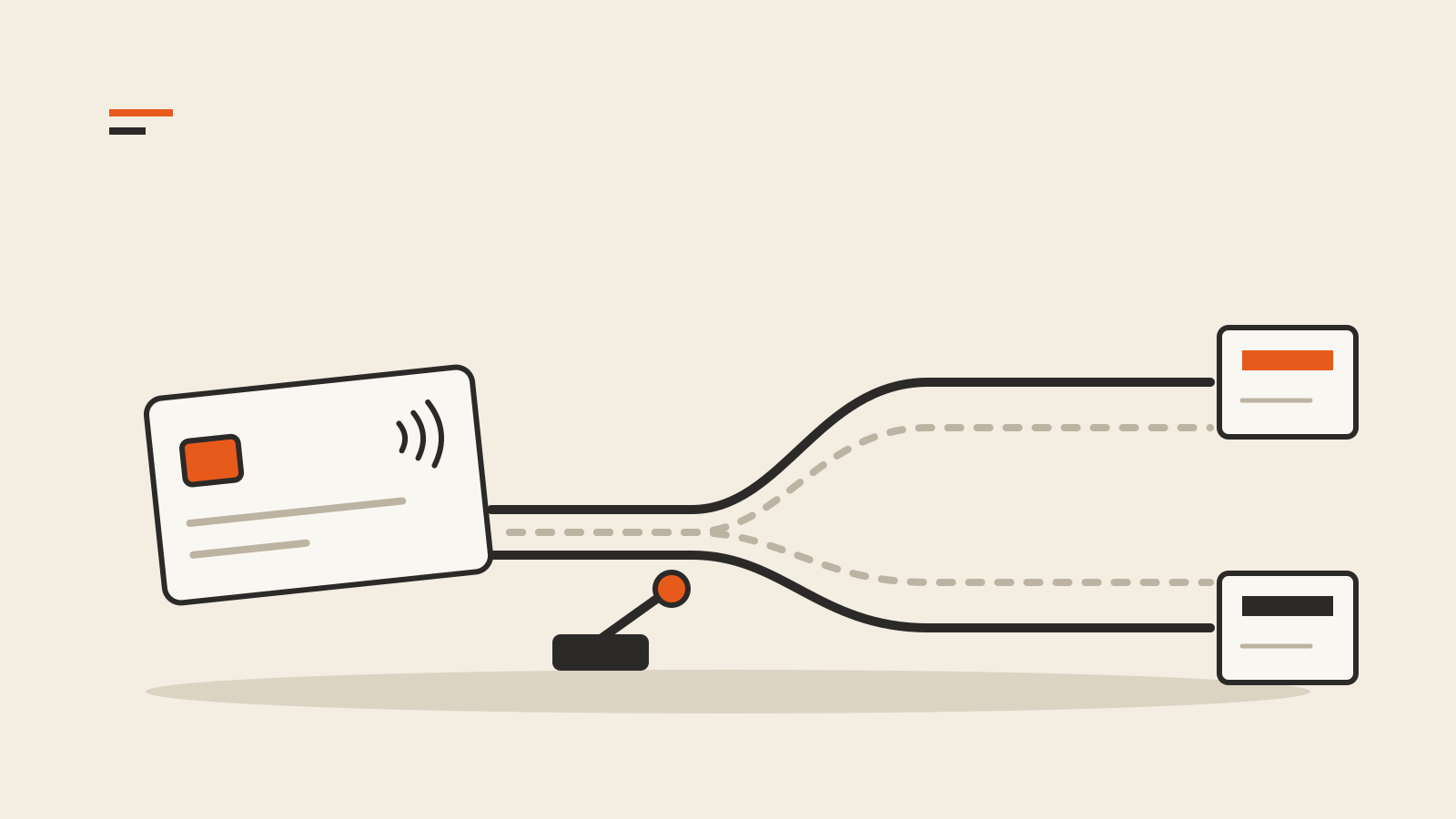
Debit card routing is the choice of which card network carries a debit payment from the merchant to the cardholder’s bank. In the United States, most debit cards must work on at least two unrelated networks, and federal rules let the merchant, not the card’s brand, direct the transaction. A merchant that never looks at routing leaves that choice to whoever sets up its payment processing.
The rule behind two networks
The requirement comes from the Federal Reserve’s Regulation II, which implements section 920 of the Electronic Fund Transfer Act. It prohibits issuers and networks from limiting the networks that can process a debit transaction to fewer than two unaffiliated networks. It also bars them from inhibiting a merchant’s ability to route a transaction over any network the issuer has enabled on the card.
When the Board first issued the rule in July 2011, the market had no broad way to support several networks for online, “card-not-present” debit payments. In an October 2022 final rule, the Board stated that issuers should enable at least two unaffiliated networks for all debit transactions, including online ones. That rule took effect on July 1, 2023.
What a network may not do
The Fed’s Regulation II FAQs show how the routing protection works at the counter:
- Chip application choice. If a terminal offers the cardholder one chip application that reaches only a single network, a network cannot require the merchant to let the cardholder make that choice. Doing so prevents the merchant from directing the transaction.
- Authentication tied to one network. A card does not comply if, once it is used, a specific authentication method forces the transaction onto one network and the merchant cannot have it authenticated for another enabled network.
- Fees on competitors. A network may not charge a fee that raises the cost of routing over a competing network, even if it applies the fee to every transaction carrying its brand.
PIN networks raise a practical point. A transaction can go over a PIN network only if the cardholder has a PIN, so the FAQs explain how a prepaid card issuer relying on a PIN network must provide one.
Why routing affects what a merchant pays
Routing matters because networks charge differently, and because the interchange part of a debit fee is capped for large issuers. The Fed’s interchange fee data page states the standard: a covered issuer may not receive more than $0.21 plus 0.05% of the transaction value, plus a $0.01 fraud-prevention adjustment if it qualifies.
On a $50 purchase, that cap works out as:
$0.21 + ($50 × 0.05%) + $0.01 = $0.245
The cap applies to issuers that, together with their affiliates, have $10 billion or more in assets. The Board publishes lists of exempt and non-exempt institutions, currently based on assets as of December 31, 2025. Debit cards from government-administered programs and certain reloadable prepaid cards are exempt as well, even when a large bank issues them.
The cap may change. In an October 2023 proposal, the Board suggested lowering it so that the cap on a $50 transaction would fall from 24.5 cents to 17.7 cents, with an update every other year based on issuer cost data. The Regulation II pages still stated the 21-cent standard when this article was checked; look there for any change before relying on a figure.
Interchange is only one part of the total. Our guide to interchange fees explains how network fees and the processor’s markup sit on top, and the payment fee calculator compares published processor pricing.
Questions to ask your processor
A merchant rarely routes transactions by hand. The decision is usually built into a processor’s or acquirer’s systems, so ask about it directly:
- Which debit networks do you route to, for in-store and for online payments?
- How do you choose a network for each transaction, and can I see the result on my statement?
- Does my pricing pass through network and interchange costs, or charge a flat rate that hides the routing decision?
The answers show whether routing choices can affect your costs. On flat-rate pricing, they may not change what you pay at all.