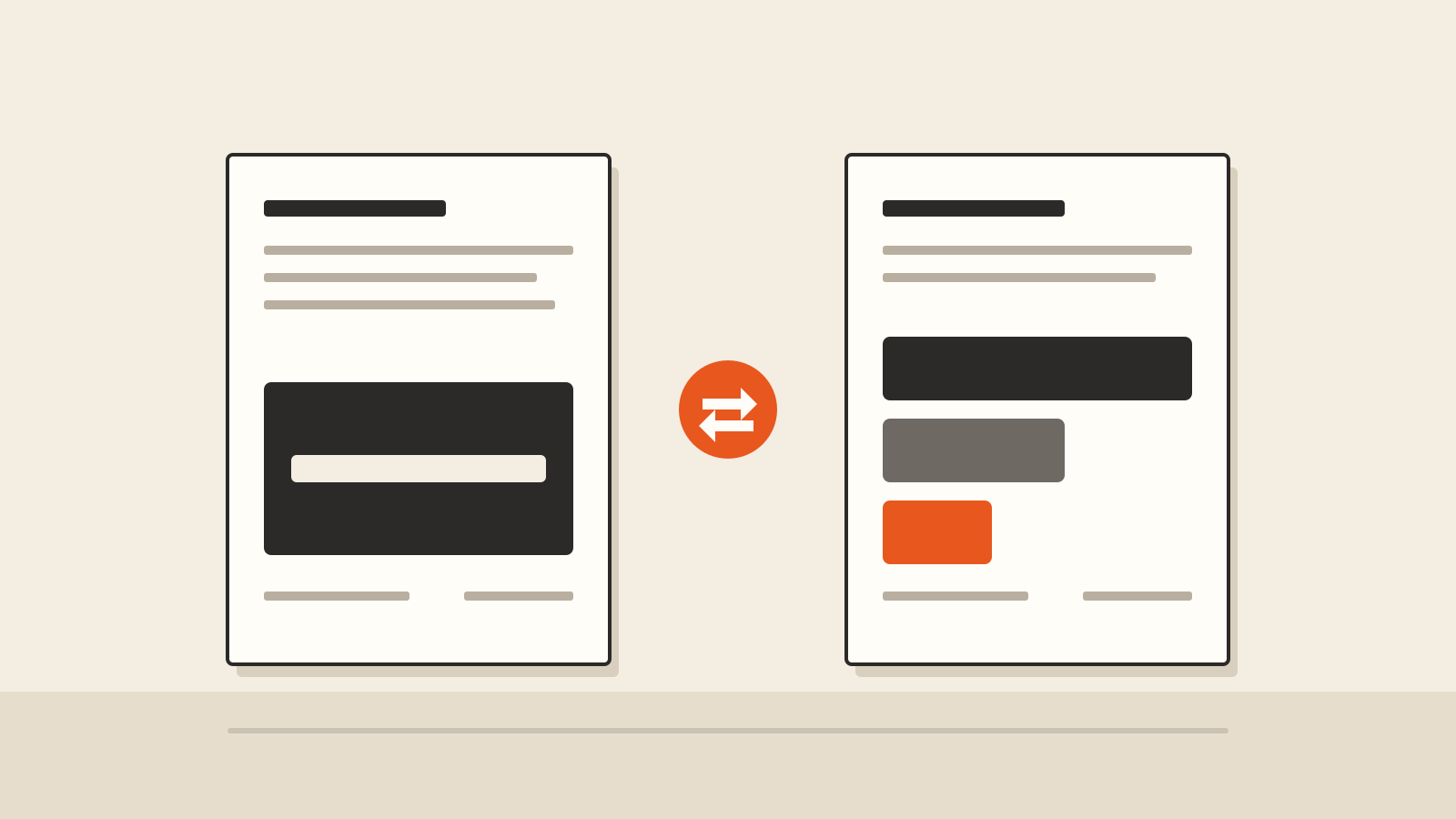
A small online shop signs up with a payment provider, accepts the standard rate and never thinks about it again. A year later the business has grown, most customers pay with local debit cards, and a sales rep from another provider offers “interchange-plus.” Choosing between interchange plus vs flat rate pricing comes down to one question: does a single rate on every payment cost more or less than paying the real cost of each card plus a fixed markup?
Both models charge for the same three things. Our guide to the interchange fee explains them: interchange goes to the bank that issued the card, the scheme fee goes to the card network, and the markup stays with the provider. What changes between the two models is how much of that split you can see, and who carries the difference between cheap and expensive cards.
Flat rate: one number for every card
With flat-rate pricing, also called blended pricing, every card payment costs the same percentage, often with a fixed amount per transaction. Stripe’s guide to interchange plus pricing describes blended pricing as “a single, all-inclusive rate no matter what kind of card your customer uses,” set by the payment provider.
The provider pays the actual interchange and scheme fees in the background and keeps the difference. Nuvei’s help page on pricing types states it plainly: that margin “isn’t itemised or shown separately.”
The appeal is predictability. You know the cost of a sale before it happens, and the monthly statement is short. Stripe notes that blended pricing is widely used by smaller businesses for that reason.
The cost is averaging. The rate has to cover expensive transactions, such as premium rewards cards, commercial cards or cards issued abroad. So on a cheap transaction, such as a domestic debit card, you pay more than that payment costs the provider. Stripe’s own guide says a business on blended pricing “might overpay on lower-cost transactions because the rate will be set high enough to cover the expensive ones.”
Interchange-plus: the real cost, plus a markup
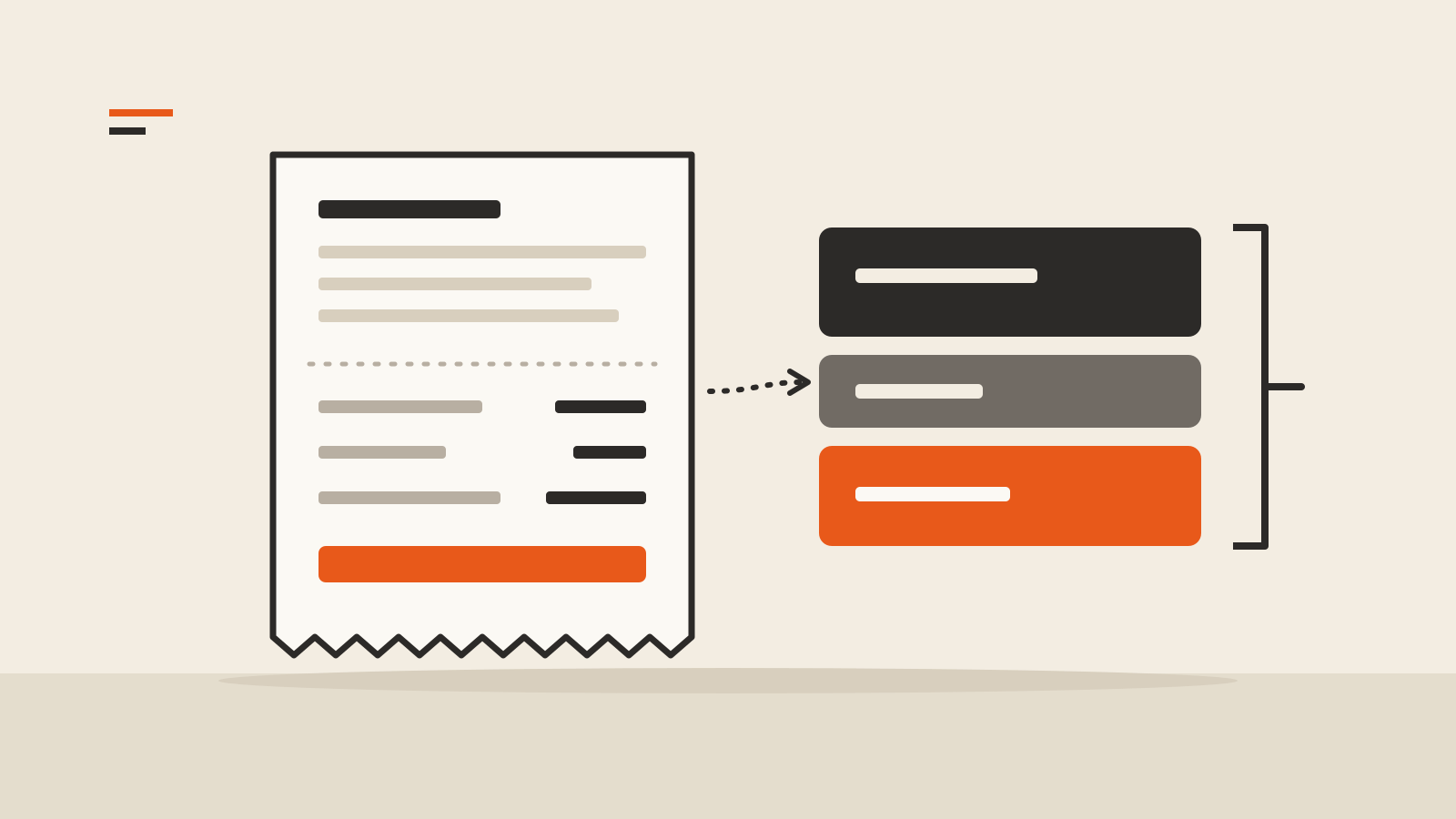
With interchange-plus, each payment is charged at its actual interchange, plus the scheme fee, plus a markup agreed in the contract. A cheap card costs you less and an expensive card costs you more.
The name covers two variants, and quotes do not always say which one is on the table. Nuvei’s help page draws the line:
- IC+ (interchange plus) shows interchange on its own line, while the scheme fee and the provider’s margin are combined into one markup.
- IC++ (interchange plus plus) shows interchange, scheme fees and the provider’s margin as three separate lines.
Adyen calls its version Interchange++ and lists the same three parts on its help page. When comparing an IC+ quote with an IC++ quote, remember that the IC+ markup already includes the scheme fees, so the two markups are not directly comparable.
How card mix decides the cheaper model
The cheaper model depends on which cards your customers use. Adyen’s interchange explainer lists what pushes interchange up or down: debit cards cost less than credit cards, in-person payments less than online ones, consumer cards less than commercial cards, domestic cards less than cross-border ones, and rewards cards carry higher rates.
Two shops with the same monthly sales can therefore see very different results:
- A café in the eurozone whose customers mostly tap local consumer debit cards. EU law caps interchange on consumer debit cards at 0.2% of the payment under Regulation (EU) 2015/751. On interchange-plus, the shop pays that low interchange directly. On a flat rate, it pays as much for a cheap local debit payment as for a payment with a foreign corporate card.
- An online store selling to business buyers in several countries, with many commercial and cross-border cards. Those cards sit at the expensive end of Adyen’s list, and EU caps on consumer cards do not cover commercial cards. Here a flat rate can work out cheaper, because the provider absorbs some of the cost of expensive cards.
Nuvei’s help page uses example figures to show how quotes look: “for example 1.5%” for a blended rate, and “interchange + 0.15%” for an IC+ quote. Applied to the café’s capped debit cards, the IC+ quote would come to no more than 0.35% before any fixed per-transaction fees, against 1.5% for the blended example. These are illustration figures from Nuvei’s page, not a price any provider offers you. The method is what carries over: add your real interchange and scheme fees to the quoted markup and compare the result with the blended rate.
In the US the gap behaves differently. The Federal Reserve’s Regulation II limits debit interchange only for large issuers, and credit card interchange has no federal cap. Adyen puts typical US interchange at “1.5% to 3.5%+,” a range from a vendor’s overview, not a regulated figure. A US shop with many premium credit cards may find that interchange alone takes most of what a flat rate would charge.
The trade-offs that are not about price
Interchange-plus brings work with it:
- Costs move. Your effective rate changes each month with your card mix. Stripe says this “can take some adjustment” for a business used to budgeting a flat rate.
- Rates change twice a year. According to Adyen, Visa and Mastercard publish new interchange rates in April and October. On a flat rate, the provider absorbs those changes. On interchange-plus, they reach your statement.
- Statements get longer. Every card category appears as its own line. That helps a finance team check the bill, and it costs time for an owner who does the books alone.
In return you gain the ability to check every charge and to negotiate the one number that belongs to your provider. Stripe notes that markups can often be renegotiated as volume grows.
When to ask about switching
Most providers start new accounts on a standard rate and offer other pricing only above a certain volume. Stripe’s pricing page offers custom packages “for businesses with large payments volume or unique business models.” Square’s pricing page invites businesses that process over $250,000 a year to ask whether they are eligible for custom pricing and processing fees. A request for interchange-plus pricing usually starts in that conversation.
Before you ask, gather three things:
- Three months of statements, to see your total fees and sales volume.
- Your card mix: the share of debit, credit, commercial and foreign cards, and the share of online versus in-person payments. Many provider dashboards break this down.
- The quote’s structure: IC+ or IC++, the markup as a percentage, any fixed fee per transaction, any monthly minimum, and the chargeback fee charged per dispute.
Then rebuild last month on both models. If the interchange-plus total is lower and the difference matters to you, it is worth the more detailed statement. To compare providers’ standard published flat rates for a single payment first, use our payment fee calculator.