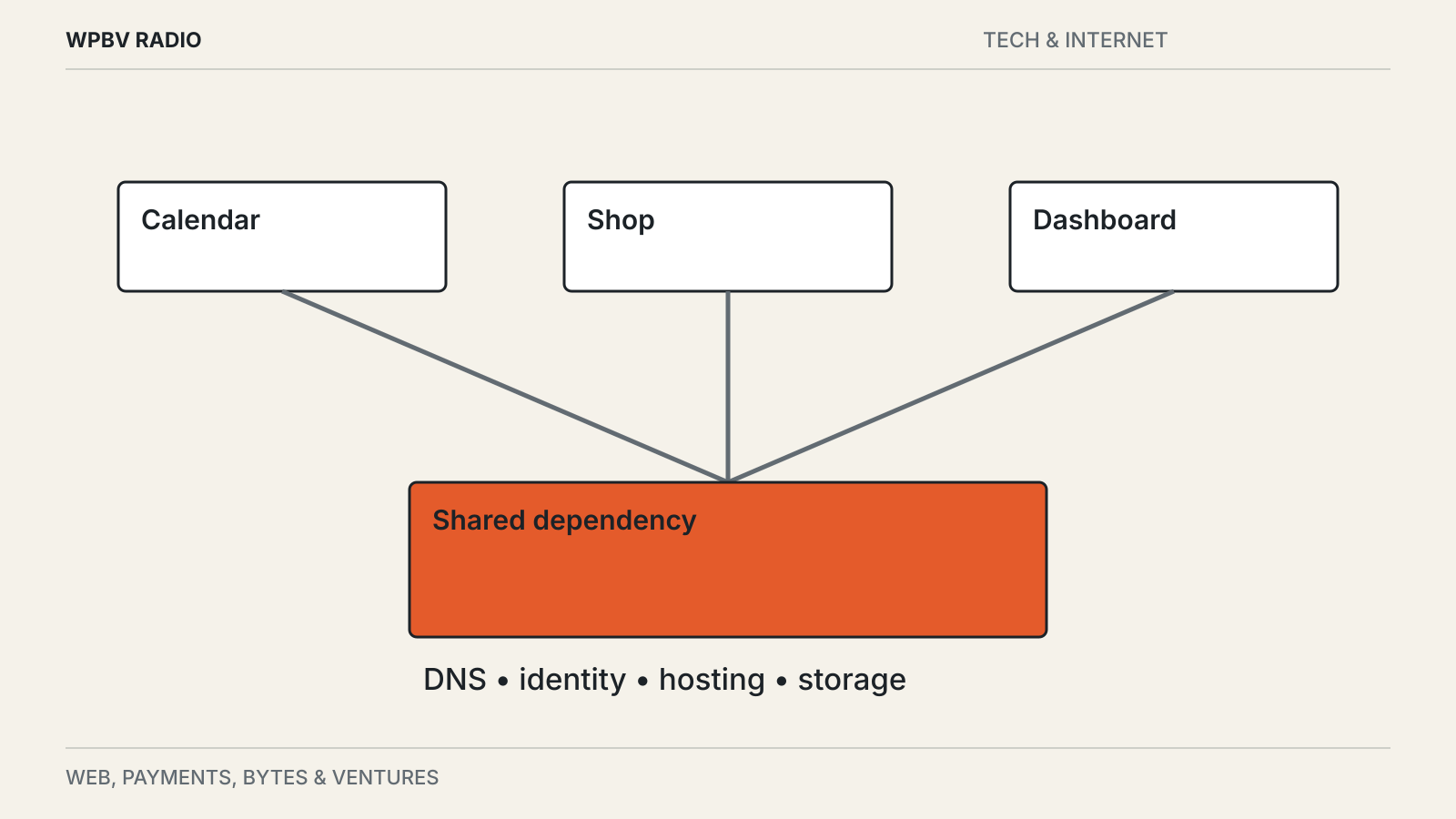
Your calendar fails to load, an online shop will not accept payment and a work dashboard stops responding. The companies have different names and different customers. Behind the scenes, they may depend on the same service.
Modern applications assemble infrastructure from many providers. That creates useful specialization, but it also creates shared failure points. The part that breaks may be far removed from the feature you were trying to use.
The page is only the visible end
Opening an app can involve several dependencies before its own software does useful work. Your device needs to find the server, establish a secure connection and retrieve the interface. The app may then contact a login provider, database, file store and payment service.
A failure at any stage can produce the same unhelpful spinner.
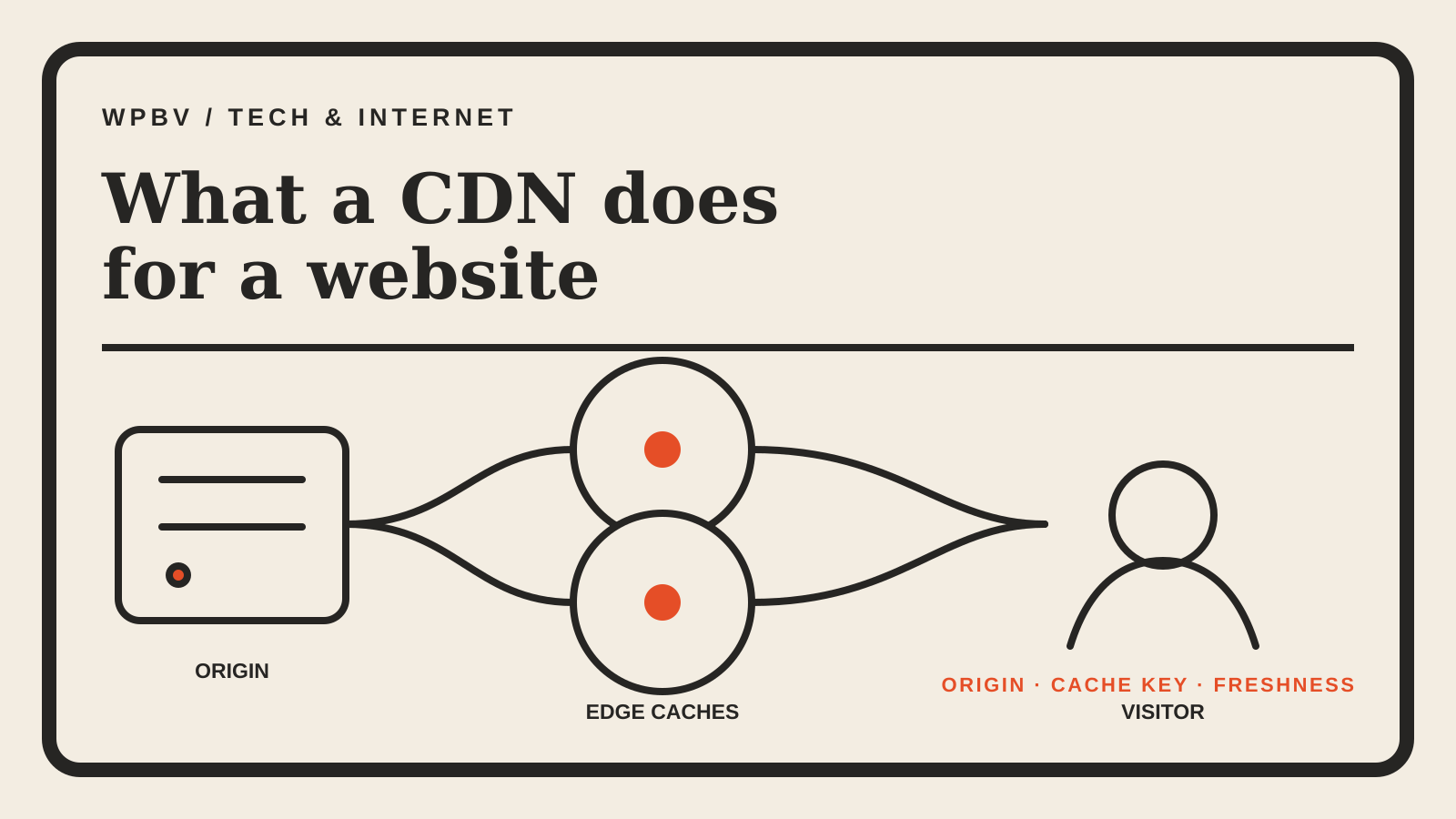
DNS is one example. Cloudflare’s DNS introduction explains how names are resolved to the addresses used to reach services. If that lookup fails, a healthy application can still be unreachable. Restarting the application server would not repair the missing route to it.
A shared provider can create correlated failures
Two apps may use the same cloud region, identity provider or content-delivery network. If that dependency becomes unavailable, both can fail at once even though their own code is unrelated.
The scope depends on the design. An unavailable image service might leave an article readable with missing pictures. An unavailable login service might prevent new sessions while existing ones continue. A payment dependency might let people browse but stop checkout.
This is why an outage report should name affected functions, not just say a platform is “down.” Partial failures can have very different consequences for different users.
Redundancy has to cover the right layer
A second server helps only if the failure is something that server avoids. Two servers in the same region may share networking, power or control systems. Two regions may still depend on a single account configuration or external login service.
That does not mean every small product needs a complex multi-provider architecture. Complexity brings cost and new ways to fail. It does mean the recovery plan should match the dependency that matters most.
For a business user, useful questions include whether work can continue offline, whether data can be exported and which functions remain available during a disruption. Our local-first app guide offers practical checks for one way of reducing dependence on a continuous connection.
Read the timeline carefully
An incident announcement often progresses from investigation to identification, mitigation and recovery. Those labels do not all mean the service is working normally.
A mitigation may reduce the impact while a backlog remains. Restored infrastructure may need time to process queued jobs. A dashboard can appear healthy while a particular region or customer group still experiences errors.
Compare the timestamp, affected products and region with your own symptoms. Prefer the provider’s official status page or incident report over a screenshot circulating without context, and keep in mind that a status page often lags behind the outage in its first minutes. An early explanation can change as engineers gather evidence.
What a useful post-incident account explains
A good account separates the triggering event, the mechanism of failure and the reasons the impact spread. “A configuration change” names a trigger but does not explain why safeguards failed to contain it.
Look for the duration, affected functions, recovery steps and concrete follow-up work, as in Microsoft’s preliminary review of the Azure gateway outage of September 30, 2026. Also notice what remains uncertain. The first public update may be written while the incident is still unfolding.
For users, the immediate decision is often modest: wait, use an alternative route or preserve unsent work. Avoid repeatedly submitting a payment or destructive action just because the first attempt timed out. A failed response does not prove the server never completed the request.